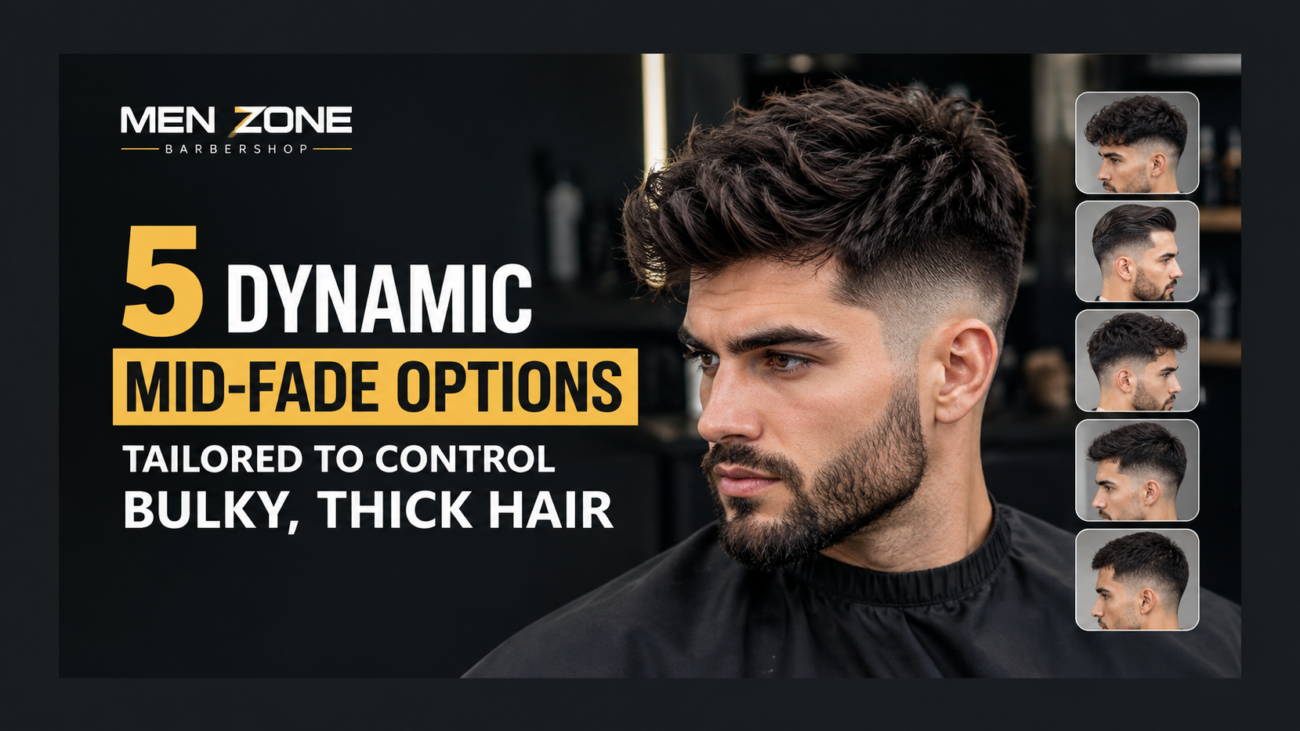
Thick, bulky hair can look great when it is properly shaped, but it can also become difficult to manage when the sides start expanding or the top loses its structure. The right fade can remove unnecessary weight while keeping enough length to create a balanced, masculine style.
A mid fade is especially useful for thick hair because it creates a controlled transition around the middle of the sides and back. Instead of removing too much hair at the bottom or leaving excessive bulk around the temples, a well-planned mid fade gives the haircut a cleaner silhouette while preserving the natural strength of thick hair.
If you are searching for a Barber Near Me who understands how to work with dense or coarse hair, it is important to choose someone who considers your hair growth pattern, head shape, texture, and preferred styling routine—not simply the fade number you request.
Why Is a Mid Fade Effective for Thick Hair?
Thick hair naturally creates volume. While that volume can make a haircut look fuller, uncontrolled density around the sides can make the head appear wider than it actually is.
A mid fade solves this problem by gradually reducing the hair around the sides and back while leaving more length toward the upper sections. This creates a smooth visual transition rather than an abrupt change in length.
The result is a haircut that feels lighter and cleaner without making the top look excessively thin.
For men with particularly dense hair, the barber may also use techniques such as debulking, scissor-over-comb, point cutting, or texturizing. These methods can reduce unnecessary weight while maintaining the overall shape of the haircut.
1. Classic Mid Fade With a Textured Top
The classic mid fade is one of the easiest options for thick hair because it provides structure without requiring an extreme change in length.
The fade begins around the middle of the sides and gradually blends down toward the shorter sections near the ears and neckline. The top remains longer and can be textured to prevent it from appearing too heavy.
Why It Works for Thick Hair
Instead of fighting your natural density, this style uses it to create fullness on top while controlling the sides. Light texturing can make the top easier to style and prevent a solid, bulky appearance.
Best For
- Thick straight hair
- Slightly wavy hair
- Men who prefer a classic appearance
- Low-to-medium styling routines
- Professional and casual environments
A small amount of matte styling product can provide definition without making the hair look greasy or overly stiff.
2. Mid Fade With a Textured Crop
If your thick hair tends to become difficult to control in the morning, a textured crop paired with a mid fade can be an excellent choice.
The sides are gradually reduced through the fade, while the top is kept relatively short and textured. Rather than creating a perfectly flat surface, the barber introduces controlled texture so the hair moves naturally.
Why It Works
Shorter textured hair is generally easier to control than a long, dense top. The mid fade removes visual weight from the sides while the textured top creates separation between individual sections.
This can be particularly useful for men who want a modern haircut without spending a significant amount of time styling every morning.
Styling Tip
Apply a small amount of matte clay or lightweight styling cream to towel-dried hair. Work the product through the top with your fingers and allow the natural texture to create the final shape.
3. Mid Skin Fade With a Controlled Quiff
Thick hair can be an advantage when creating a quiff because density provides natural lift and volume.
A mid skin fade keeps the lower sides extremely clean while the upper sides transition smoothly into the longer quiff. The key is controlling the connection between the fade and the top.
Why It Works
The contrast between the clean sides and fuller top creates a strong, structured appearance. However, thick hair requires careful weight management. If too much density remains around the upper sides, the haircut can become unnecessarily wide.
A skilled barber can remove strategic weight without making the top look thin.
Styling Routine
- Start with slightly damp hair.
- Apply a small amount of pre-styling product.
- Blow-dry the front upward and slightly backward.
- Add a small amount of matte clay.
- Finish by shaping the front with your fingers.
This approach creates volume while keeping the overall silhouette controlled.
You might also like: The Shaving Routine That Is Secretly Causing Your Razor Bumps
4. Mid Fade With a Side-Parted Top
For men who prefer a polished appearance, a side-parted mid fade can transform thick hair into a clean and organized style.
The fade controls the sides while the longer top is divided naturally or with a defined part. Depending on your preference, the part can be subtle or sharply defined.
Why It Works
Thick hair often holds its shape exceptionally well. This makes it suitable for side-parted styles that require structure throughout the day.
The important factor is avoiding excessive bulk directly above the fade. Removing strategic weight allows the top to sit closer to the head without sacrificing its fullness.
Ideal For
This style works particularly well for:
- Office professionals
- Formal occasions
- Men who prefer classic hairstyles
- Thick straight hair
- Medium-density wavy hair
A lightweight pomade can provide a cleaner finish, while matte clay creates a more modern appearance.
5. Mid Fade With a Messy Textured Fringe
If you want something more relaxed and contemporary, combine a mid fade with a messy textured fringe.
The sides are cleaned up with a controlled mid fade while the front is left long enough to create movement. Instead of making the fringe perfectly symmetrical, the barber uses texture to produce a naturally messy appearance.
Why It Works for Bulky Hair
Thick hair can sometimes make a fringe look too heavy. Strategic texturing reduces that visual weight while maintaining enough length for movement.
The mid fade then creates contrast around the sides, making the top appear intentionally styled rather than simply bulky.
This option is especially good for men who prefer a modern haircut that does not look overly formal.
How to Choose the Right Mid Fade for Your Hair
Not every thick-haired client should receive exactly the same fade. Your ideal style depends on several factors.
Consider Your Hair Texture
Straight hair tends to create a cleaner and more structured silhouette. Wavy hair can provide natural movement, while curly or coarse hair may require additional consideration when designing the transition.
Your barber should work with your natural texture instead of forcing the hair into a shape that requires constant maintenance.
Consider Your Head Shape
A fade can change the visual proportions of your head.
For example, someone with a naturally wide head may benefit from a tighter transition around the sides. Someone with a narrower face may want to preserve additional volume toward the upper sides.
This is why simply copying a haircut from a photograph does not always produce the same result.
Think About Your Daily Routine
A high-maintenance haircut may look excellent immediately after styling but become frustrating if you only have a few minutes each morning.
If convenience is important, choose a style that works with your natural hair rather than requiring extensive blow-drying and styling.
If you’re searching for a Barber Oak Park who understands thick or bulky hair, look for someone who considers your hair growth pattern, head shape, texture, and preferred styling routine—not simply the fade number you request.
Real-Life Example: Turning Bulky Hair Into a Controlled Mid Fade
Consider a typical client with thick, straight hair who notices that his sides become bulky only a week or two after a haircut. His previous style leaves the top long, but the sides grow outward quickly, making his head look wider.
Instead of cutting the entire hairstyle significantly shorter, a barber could recommend a mid fade with a textured top.
The barber keeps enough length on top to preserve the client’s natural fullness, gradually reduces the sides around the middle of the head, and removes selected weight from the upper side sections. The top is then lightly textured so it does not sit like one heavy block.
The client can maintain the look at home with a small amount of matte clay and a few minutes of styling. After a couple of weeks, the fade may lose some sharpness, but the overall shape remains more controlled than the original bulky haircut.
This example illustrates an important point: controlling thick hair does not always mean removing as much hair as possible. Strategic weight removal and a well-planned fade can often produce a better result.
How Barbers Control Bulky Thick Hair During a Mid Fade
A good fade is not only about clipper work. Managing thick hair requires understanding how weight is distributed throughout the haircut.
1. Removing Excess Weight
The barber can strategically remove bulk from areas where the hair expands excessively.
2. Creating a Smooth Transition
The fade should gradually move from shorter to longer lengths without leaving visible dark patches or disconnected sections.
3. Texturizing the Top
Texture can break up heavy sections and create movement without dramatically shortening the overall length.
4. Maintaining the Right Shape
The goal is not necessarily to make thick hair look thin. Instead, the objective is to make the density appear intentional and balanced.
5. Considering Hair Growth Patterns
Cowlicks, uneven growth, and natural direction changes can affect how the finished haircut sits. A skilled barber takes these patterns into account before deciding where to remove weight.
How Often Should You Maintain a Mid Fade?
Thick hair can make a fade appear less defined as it grows because the sides quickly regain visible density.
For a consistently sharp appearance, many men choose to refresh their fade approximately every 2–3 weeks. A longer maintenance interval can work if you prefer a more natural, grown-out appearance.
Your ideal schedule depends on how quickly your hair grows and how precise you want the fade to remain.
What Should You Tell Your Barber?
Instead of simply saying, “Give me a mid fade,” explain what you want the haircut to accomplish.
You could say:
“I have thick hair and want a mid fade that removes the bulk from the sides but keeps enough length and texture on top.”
Then explain whether you prefer:
- A natural or sharp fade
- Short or medium length on top
- Textured or polished styling
- A defined or natural hairline
- A low-maintenance or styled finish
Showing a reference photograph can also help your barber understand the type of finish you want.
If you’re considering a Haircut Oak Park style for thick or bulky hair, discussing your hair texture and styling habits with the barber can help determine which variation will suit you best.
Professional Grooming for Thick Hair
Choosing the right haircut is only part of managing thick hair. The products and styling techniques you use at home also affect how your haircut looks between appointments.
MEN ZONE focuses on creating practical men’s hairstyles that balance modern trends with individual hair characteristics. Instead of treating every head of thick hair the same way, a personalized approach can help create a style that remains manageable after you leave the chair.
For men looking for professional grooming and a clean, controlled finish, MEN ZONE Barbershop provides haircut and grooming services designed around individual preferences, hair texture, and desired style.
For local clients, you can visit 209 Oak Park Blvd Unit 102, Oakville, ON L6H 0M2, Canada for professional men’s grooming and haircut services.
Final Thoughts
Thick hair gives you plenty of styling possibilities, but uncontrolled bulk can make even a good haircut look messy. A well-designed mid fade provides a practical solution by reducing unnecessary weight around the sides while preserving the fullness that makes thick hair distinctive.
Whether you choose a classic textured top, modern crop, controlled quiff, side part, or messy fringe, the most important factor is creating a shape that works with your natural hair.
When choosing a Barber Oak Park, focus on finding someone who understands blending, weight distribution, texture, and head shape. The right approach can turn difficult-to-manage thick hair into a sharp, confident hairstyle.
If you’re looking for a Barber Near Me to help control thick or bulky hair, focus on finding a professional who understands your hair rather than simply asking for a particular fade number.
Frequently Asked Questions
1. Is a mid fade good for thick hair?
Yes. A mid fade can be excellent for thick hair because it reduces excess weight around the sides while allowing you to maintain fullness and texture on top.
2. What is the best fade for very thick hair?
There is no single best fade for everyone. A mid fade, skin fade, or taper can all work depending on your hair texture, head shape, desired length, and preferred maintenance level.
3. Should thick hair be thinned before getting a mid fade?
Sometimes. Strategic debulking or texturizing can help control excessive density, but over-thinning can make thick hair appear uneven. Your barber should determine how much weight needs to be removed.
4. How often should I get a mid fade with thick hair?
For a consistently sharp appearance, a refresh every 2–3 weeks is common. If you prefer a more natural look, you can wait longer between appointments.
5. Can I get a mid fade if my hair is curly?
Absolutely. Curly hair can look excellent with a mid fade. The barber should account for curl pattern, shrinkage, density, and the natural direction of growth when creating the transition.
6. What styling product is best for thick hair?
Matte clay, styling cream, or a lightweight pomade can work well depending on the desired finish. Matte products are useful when you want texture and control without a shiny appearance.
7. How do I stop my thick hair from becoming bulky after a haircut?
Use an appropriate styling product, avoid applying excessive product, and maintain the sides regularly. Strategic texturizing during the haircut can also help control unwanted bulk.
8. Can a mid fade make my face look slimmer?
It can create the visual impression of a more streamlined silhouette by reducing excessive width around the sides. However, the exact effect depends on your face shape, hairstyle, and how the fade is blended.
9. Is a mid fade better than a low fade for bulky hair?
It depends on where your hair carries the most bulk and the look you want. A mid fade generally removes more visible weight from the sides than a low fade, while still leaving substantial length higher up.
10. How can I explain my thick-hair problem to my barber?
Tell your barber where the hair becomes bulky, how quickly it grows back, how much time you spend styling it, and what type of finish you prefer. This gives the barber useful information for customizing the fade.